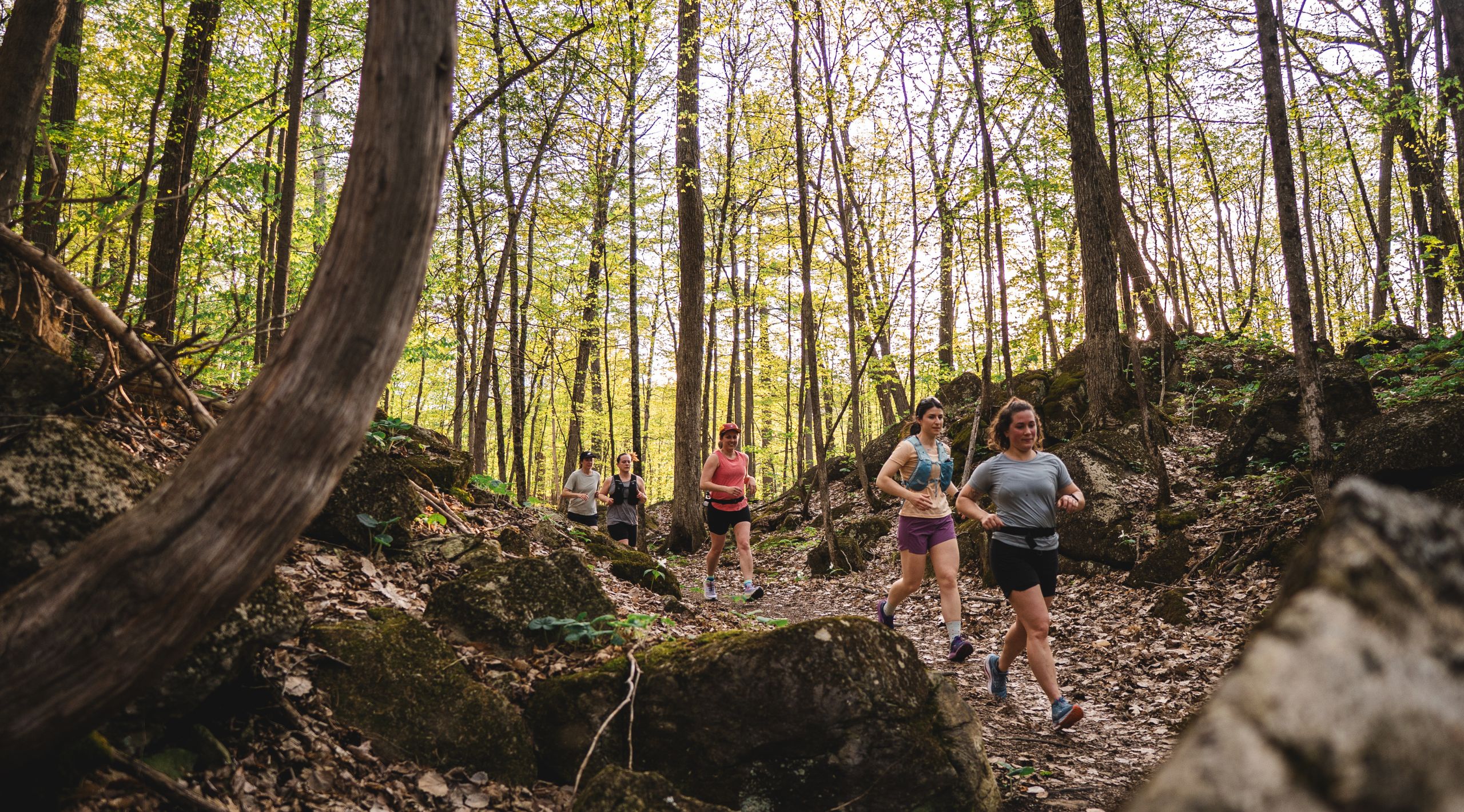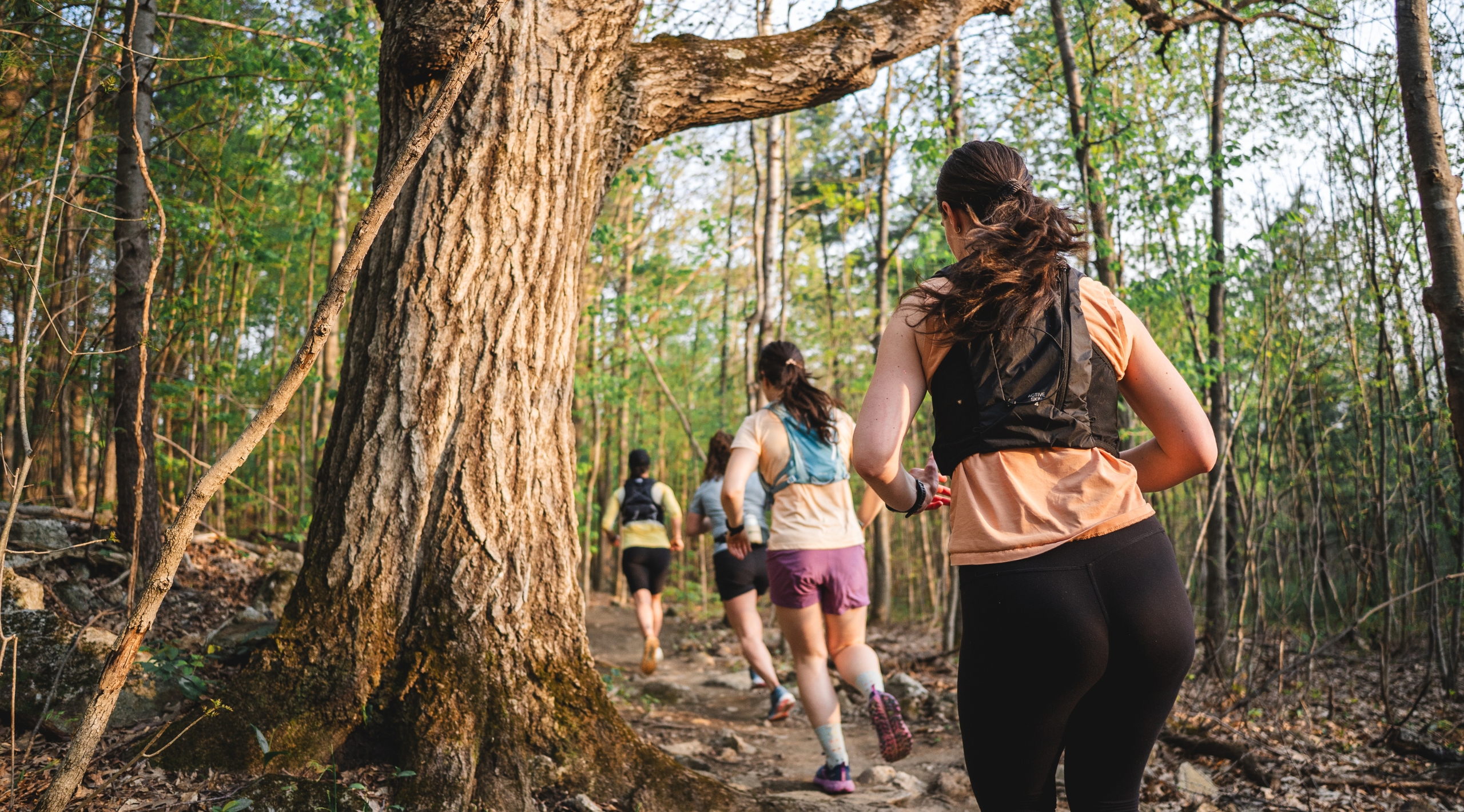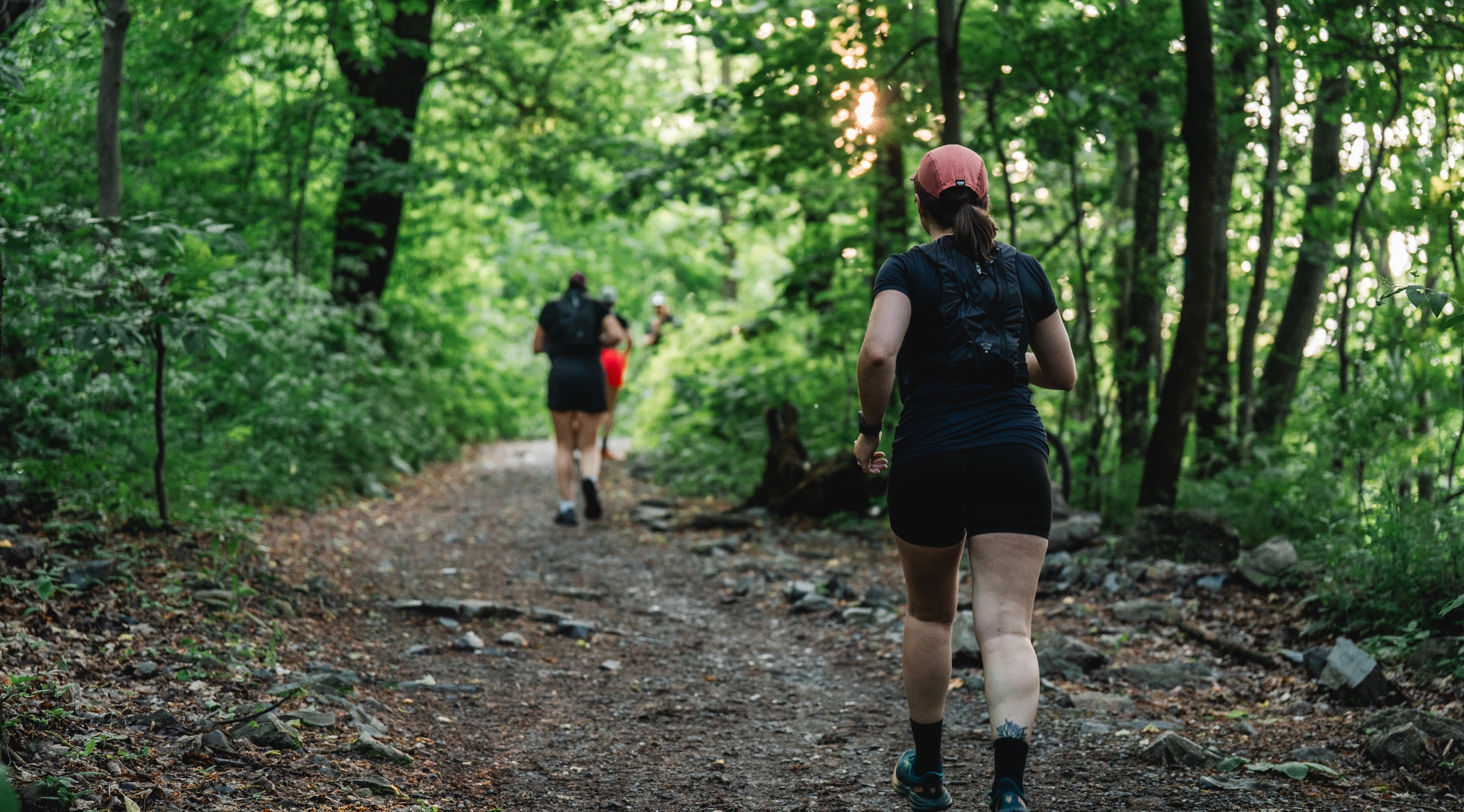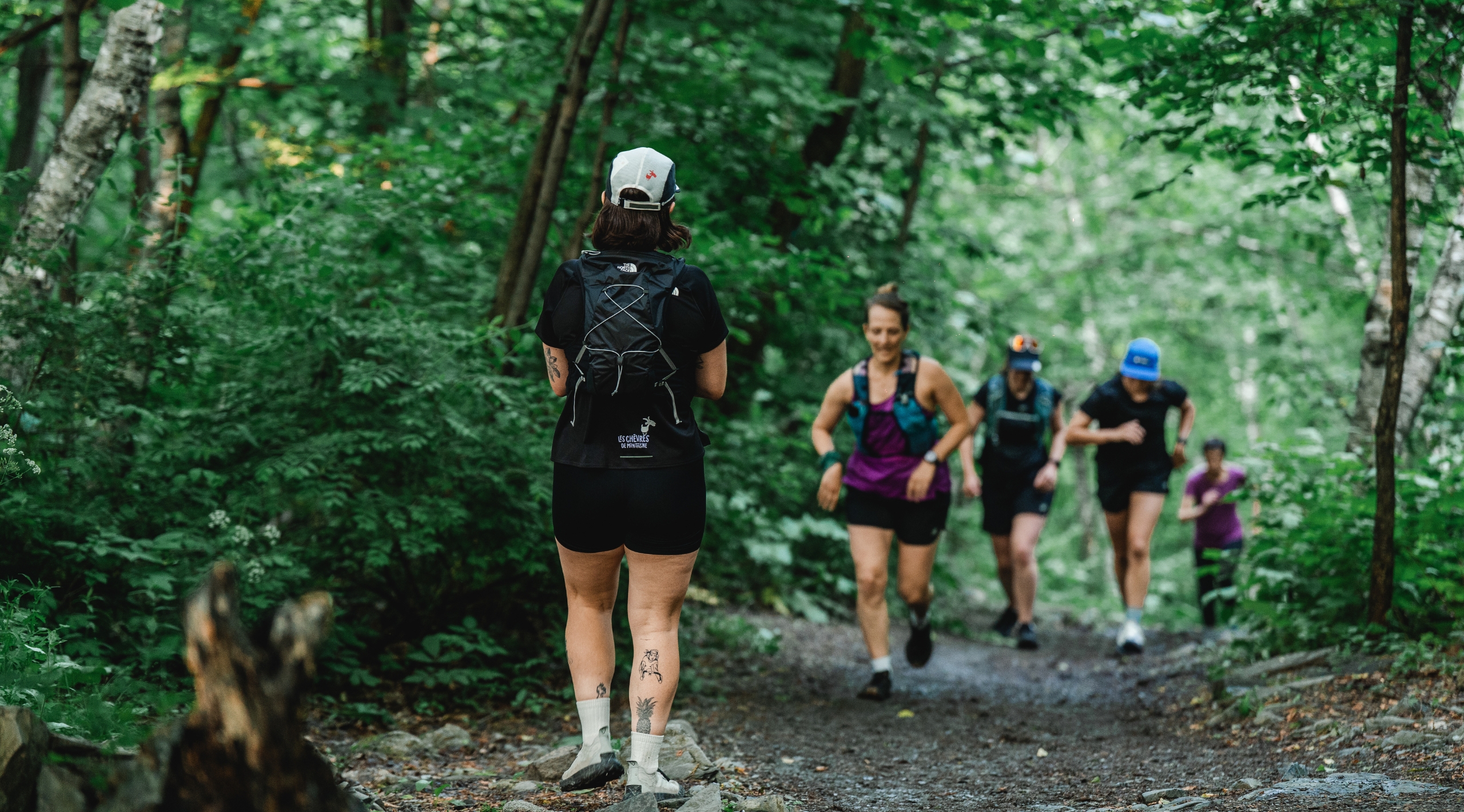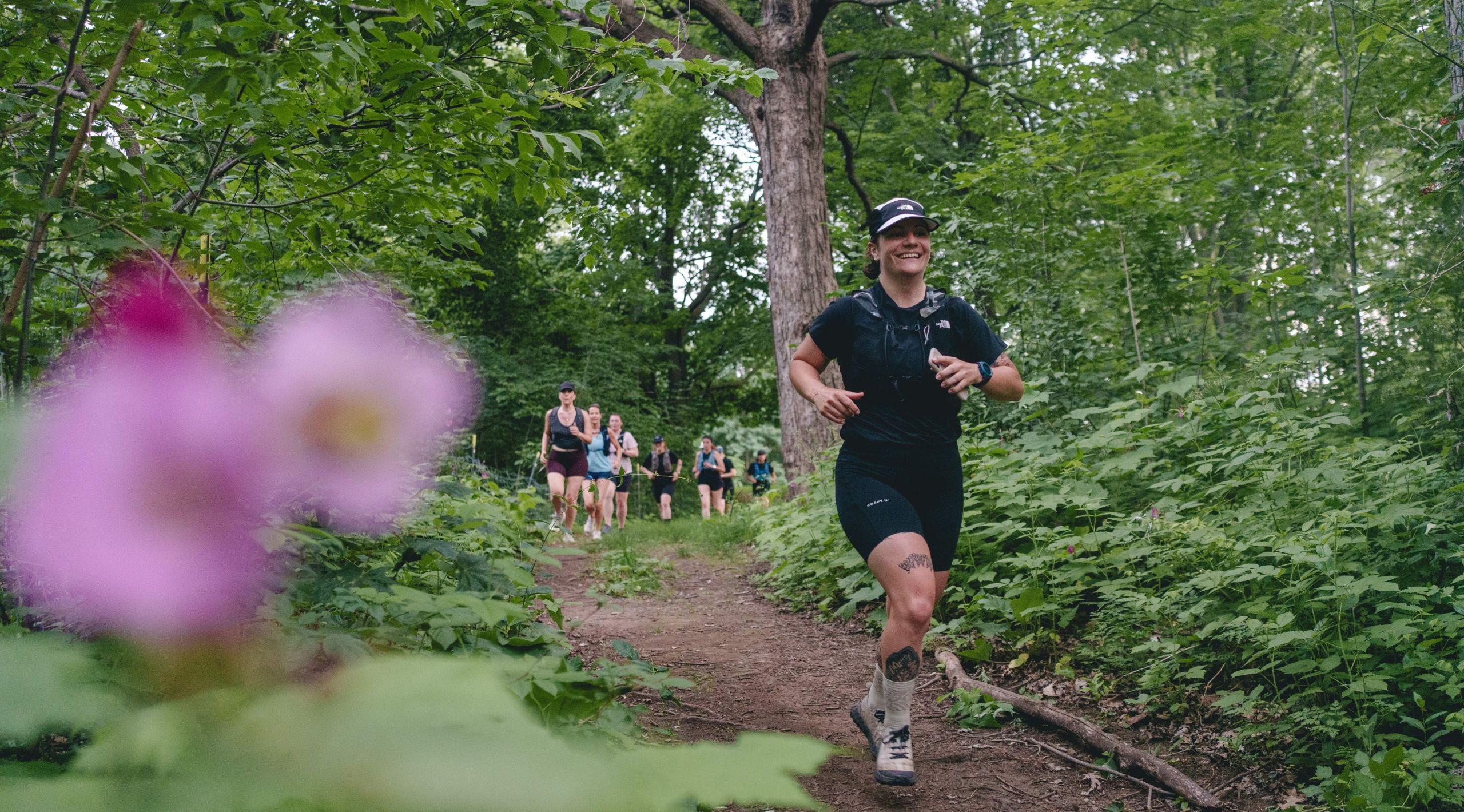


Even on the road, walking during a race shouldn’t be seen as a failure. On the contrary, walking is a valuable ally. For trail running, it’s actually the norm: running uphill is more counterproductive than beneficial. It wastes energy that isn’t put to good use for the rest of the run. So, certain technical sections should be walked rather than run to conserve as much energy as possible. So, let’s all agree—go!—to walk during our running sessions!
A few things to keep in mind:
- You can walk uphill.
- A run-walk can be a great way to get started.
- Walking helps you recover.
- Even experienced runners walk on certain types of terrain.
As you go on more runs, you can adjust both the duration and the difficulty level of the trail. You can lengthen your routes, add more elevation gain, and push your limits a little further. To improve, nothing beats incorporating interval training into your runs. Although they’re a little—or a lot!—unpopular, they’re incredibly beneficial for your progress. Our suggestion? Do them as a group with a trail running club from Chèvres or with friends (whom you’ve met beforehand at a running club from Chèvres!).
A few things to keep in mind:
- Start out slower than you think you need to.
- Alternate between walking and running.
- Save energy for the uphills and downhills.
- Learn to recognize your effort level rather than constantly monitoring your pace.
- Accept that each type of terrain requires a different approach.
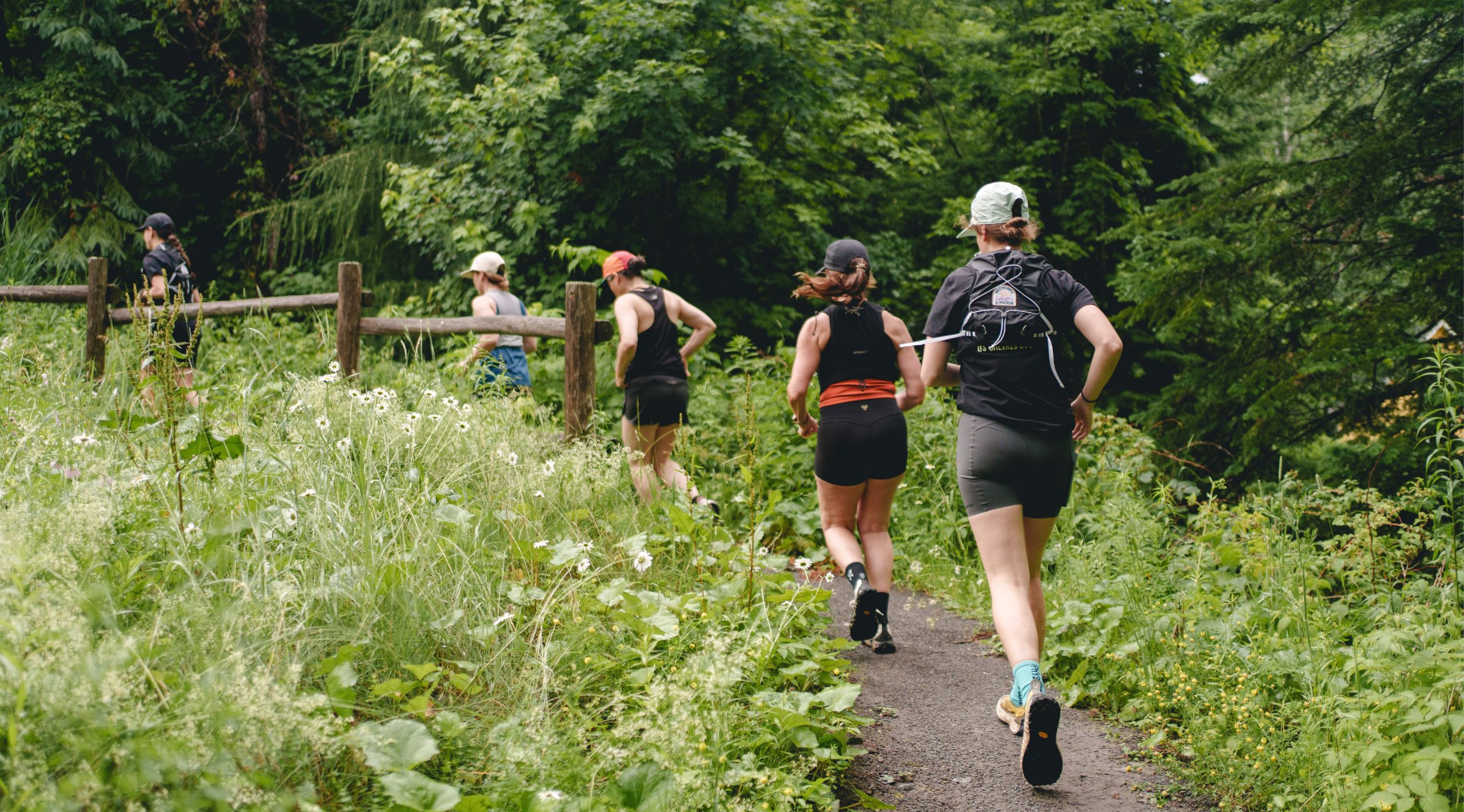
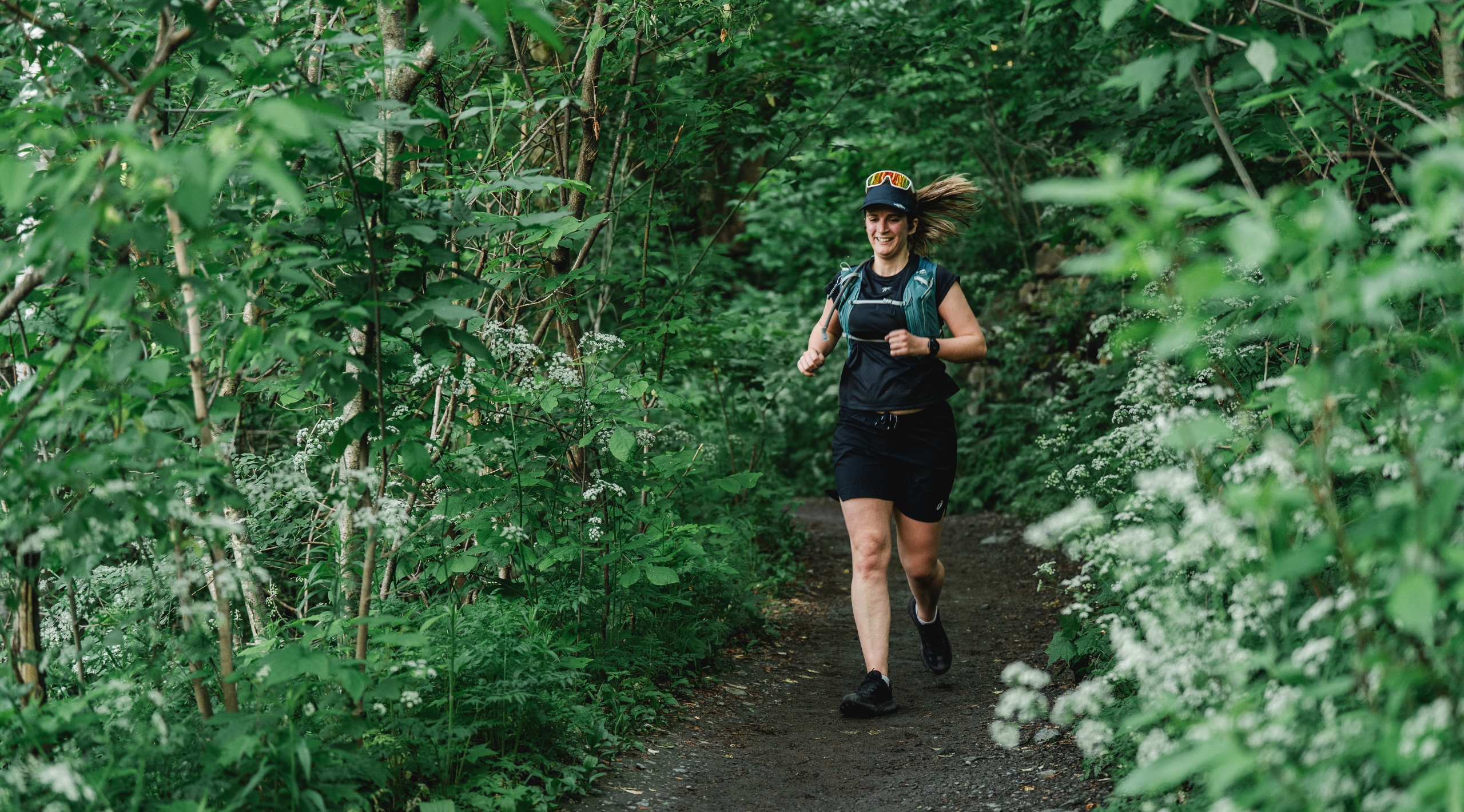
Road running and trail running are two completely different worlds. Road running allows for a faster pace, since the surface presents no technical challenges. In trail running, the pace is dictated by the terrain: the technical difficulty, conditions, and elevation changes all have a direct impact on it. In trail running, pace isn’t as important a factor as it is on the road. It’s a whole different mindset. The idea? To enjoy nature, the trail, and simply being outdoors.
A few things to keep in mind:
- Your pace on trails is completely different from your pace on the road.
- Elevation changes, rocks, roots, mud, and turns naturally slow you down.
- A slower pace doesn’t mean you’re less fit.
- Don’t try to maintain your usual pace.
- Rely more on how you feel than on your watch.
- On uphills, walking can be much more efficient than running.
- On downhills, taking your time helps you better manage your energy and the terrain.
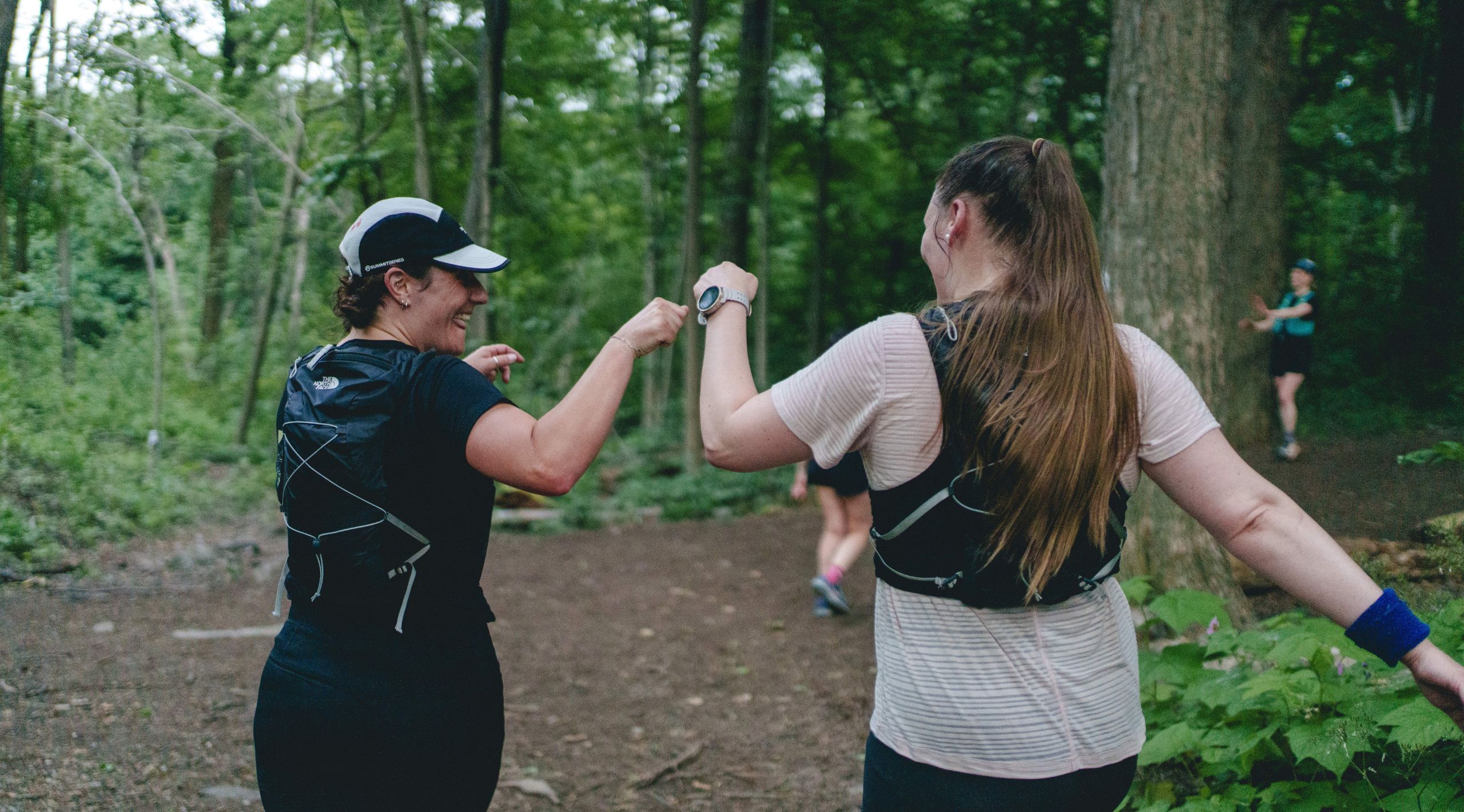
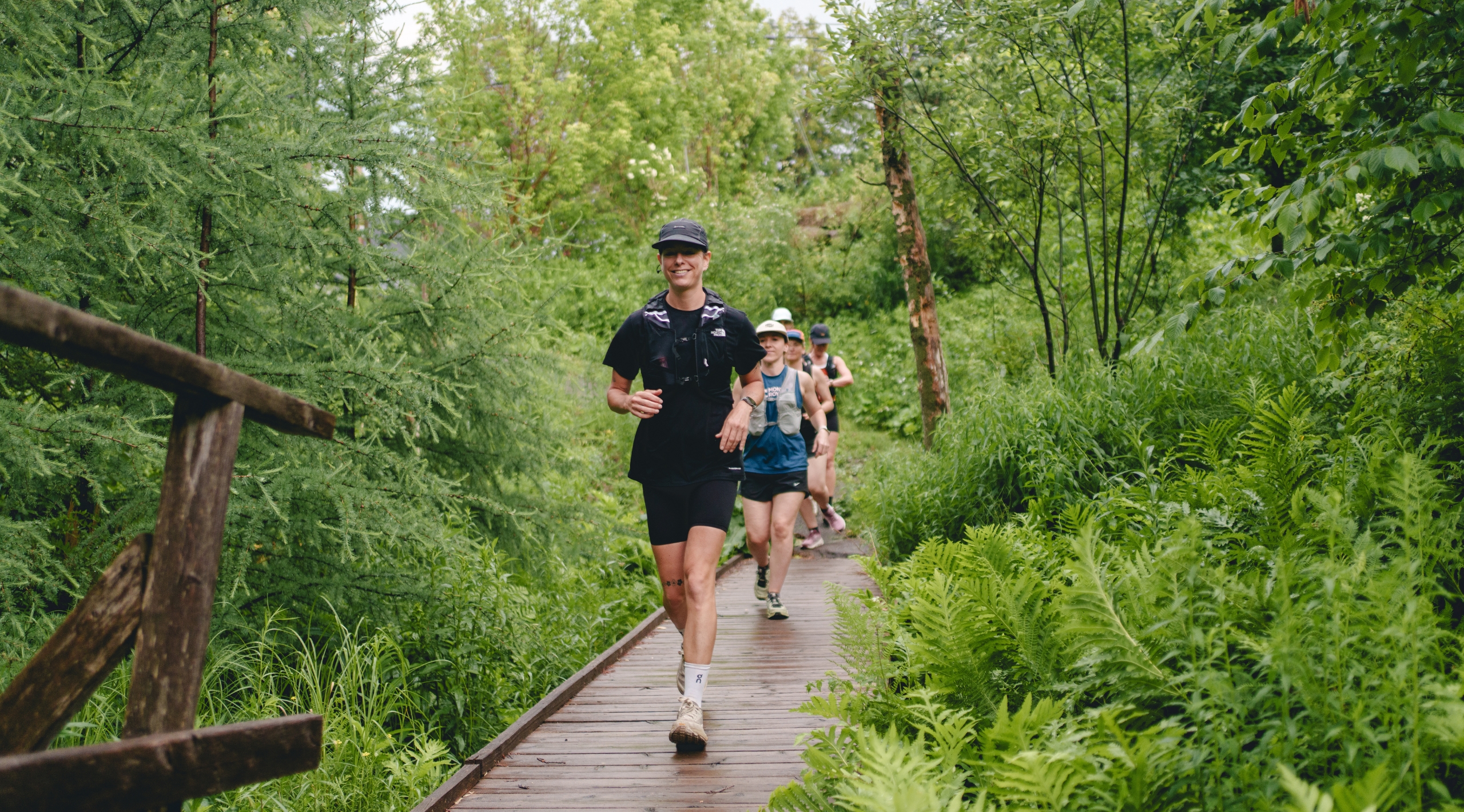
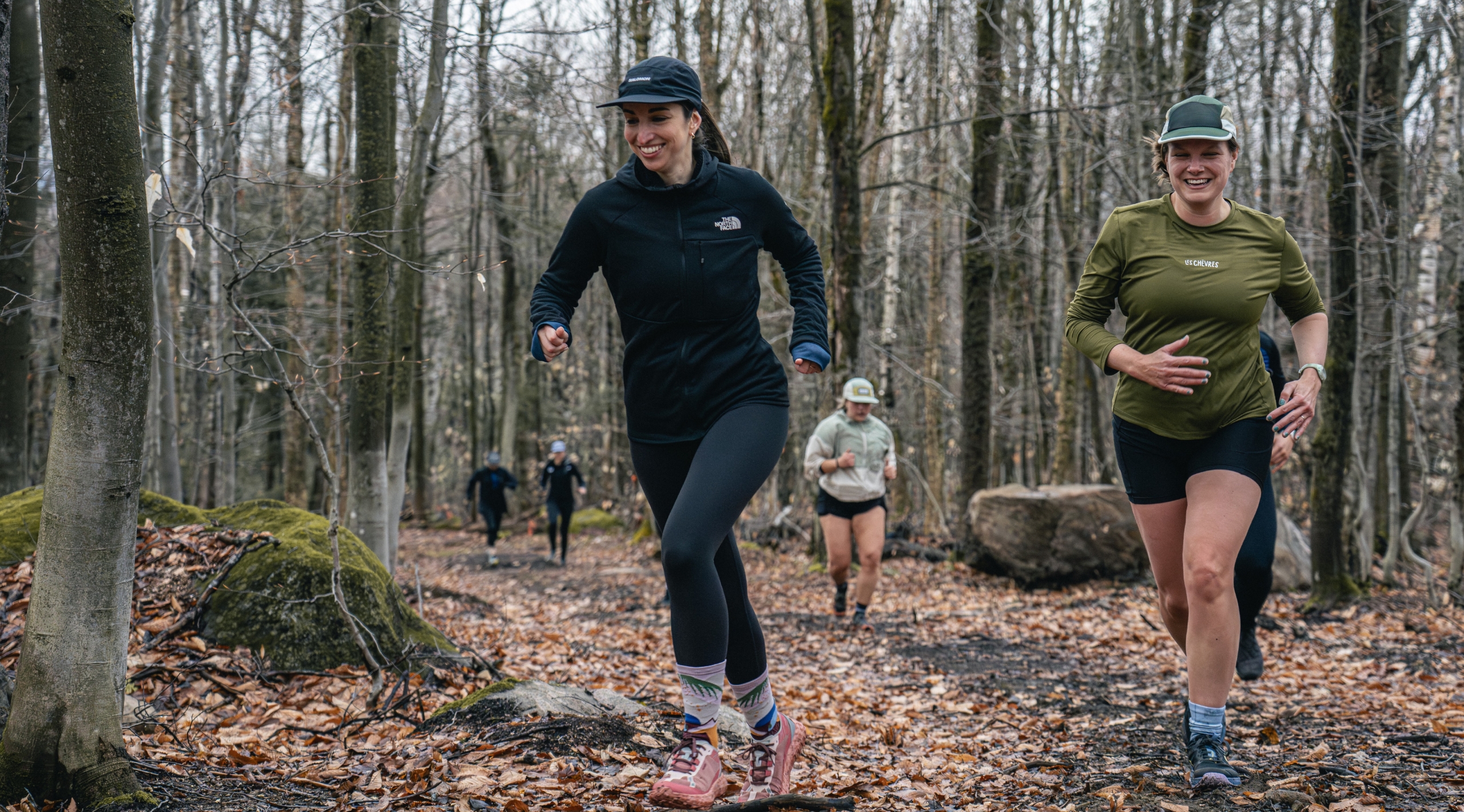
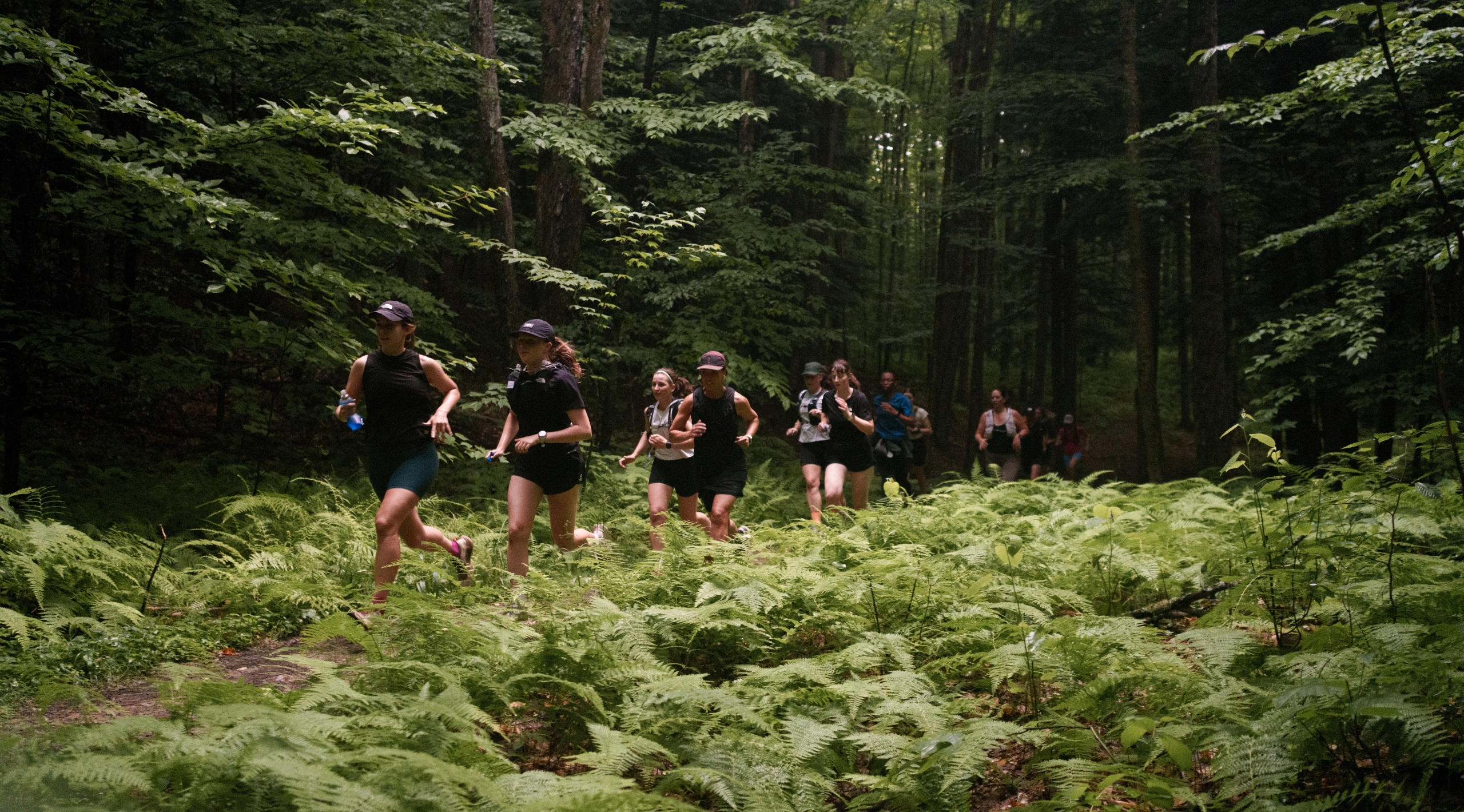
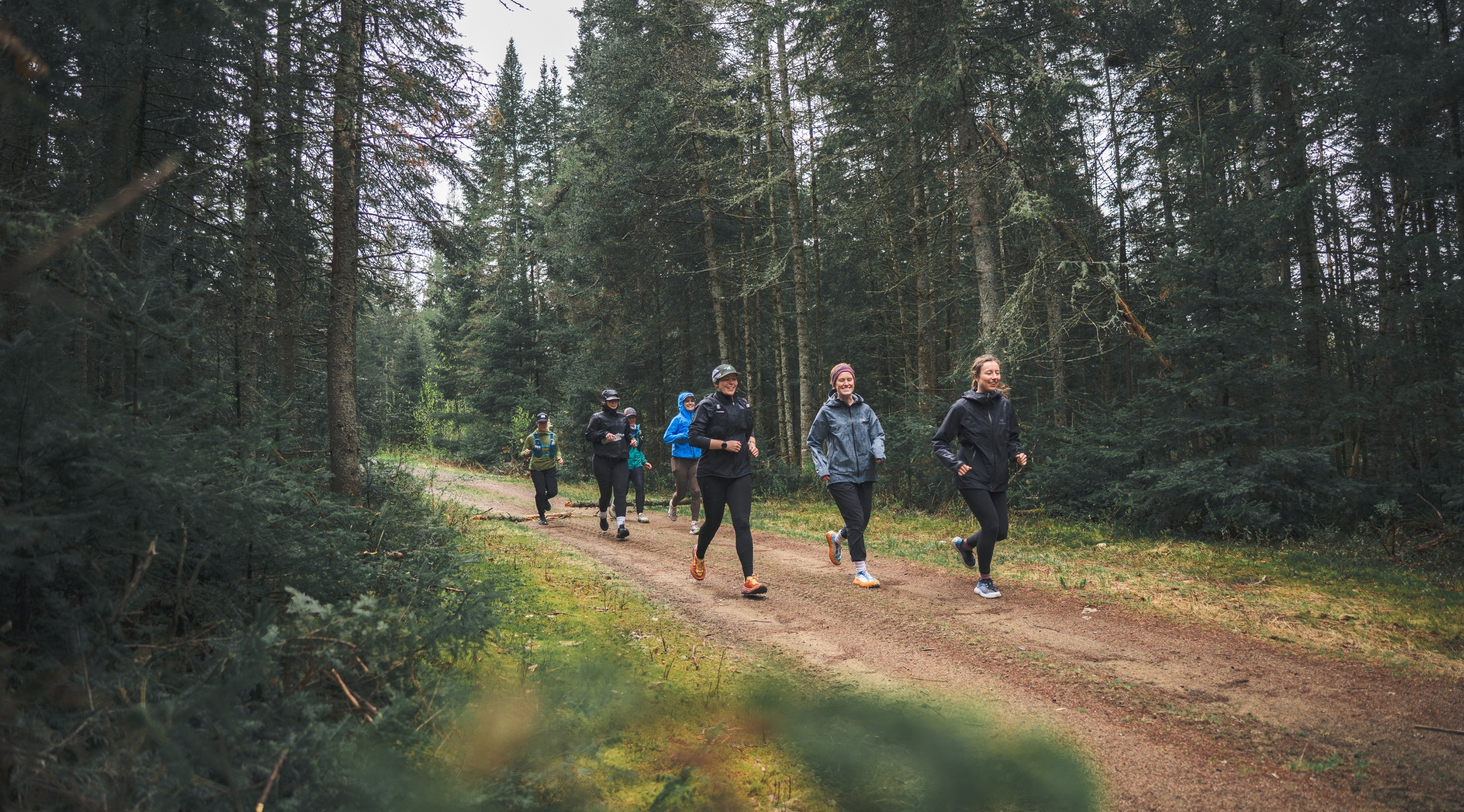
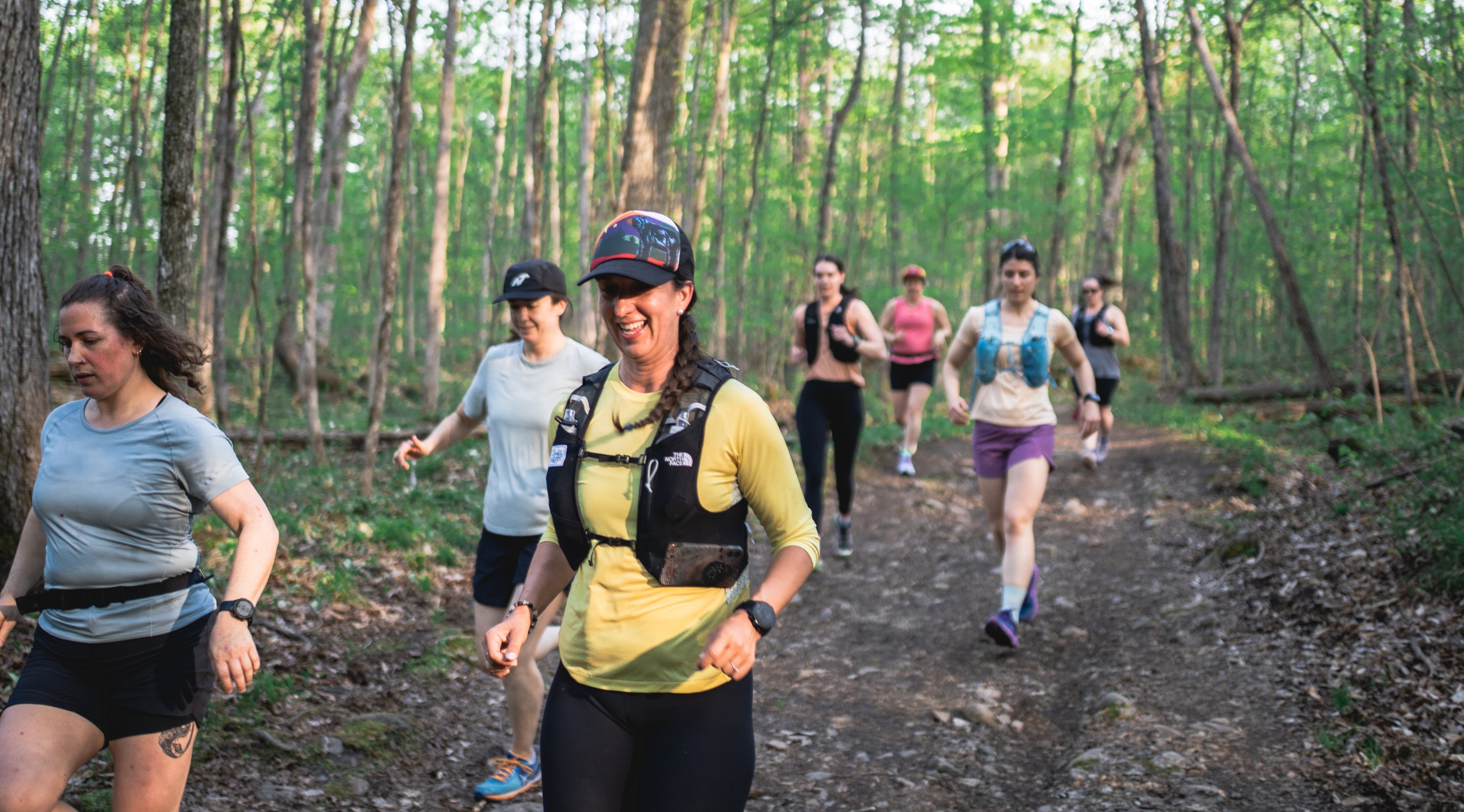
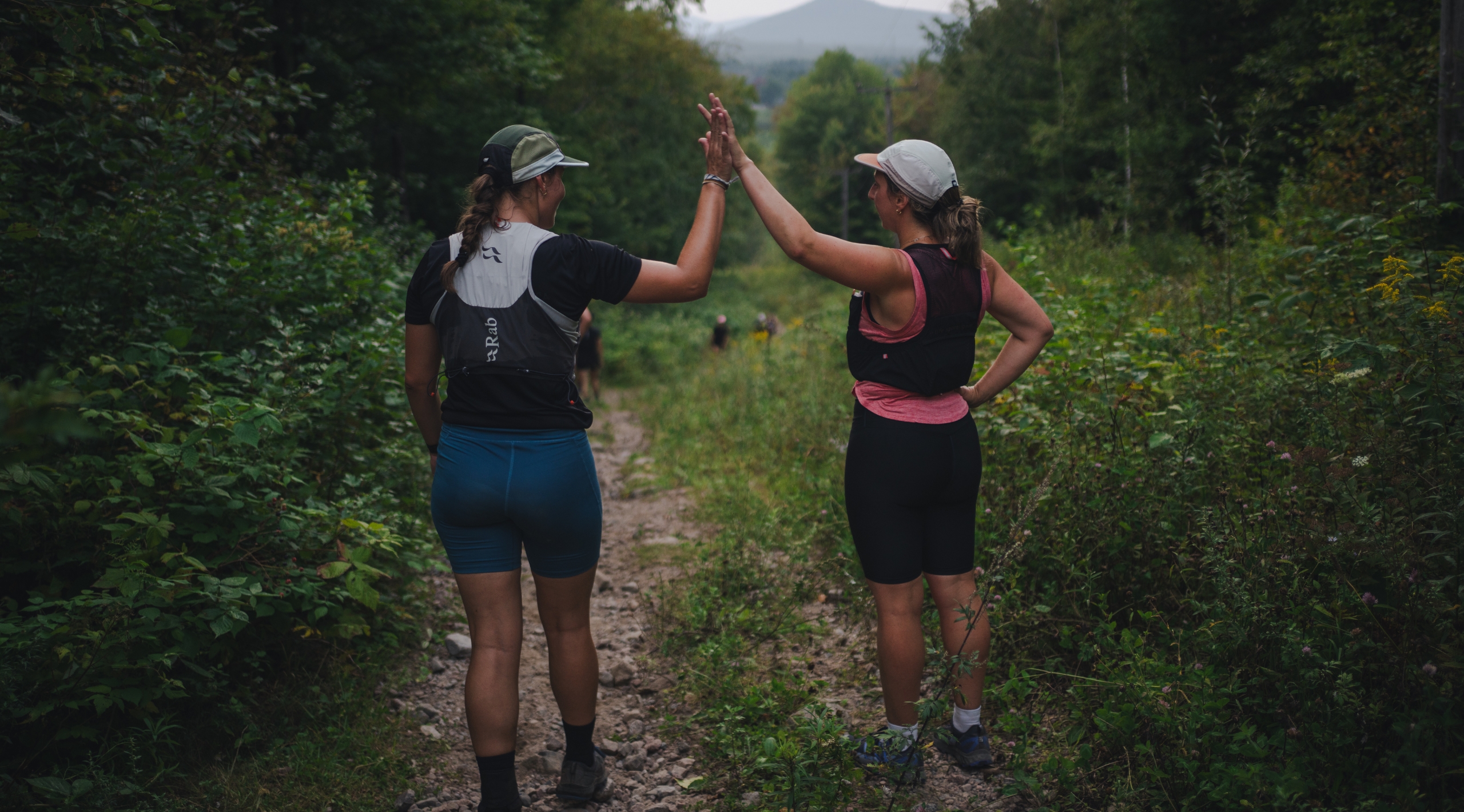
Joining a running club, a group of friends, or participating in an occasional community run gives you a real boost of energy and motivation. While running alone is definitely part of training, doing it in a group adds an element of fun. Conversations break up the rhythm, intervals are much more motivating, and the sense of accomplishment at the end of a run is celebrated even more enthusiastically. What’s more, some clubs offer coaching during runs, which enhances the experience and learning process. If you’d like to join us on trails throughout Quebec, check out our various trail running club options for women available year-round.

The MOST important aspect of all those mentioned above: have fun! Going for a run should be enjoyable. Choose trails you love, ones that let you truly connect with nature. Also, as you go on more runs, learn to get a feel for your limits so you can recognize them and adjust your routes accordingly. The goal of trail running is to get out there and enjoy what nature has to offer with every stride.
In short, trail running is for everyone. It’s a sport that’s accessible to all, and your first few outings can be a mix of hiking and running to help you get the hang of it. What about gear? There’s no need to break the bank. A pair of trail running shoes that you feel comfortable in and a hydration vest. As for the rest, just simple workout clothes and a few good friends to share the fun with. Happy running!